Waste management for ports and shipyards
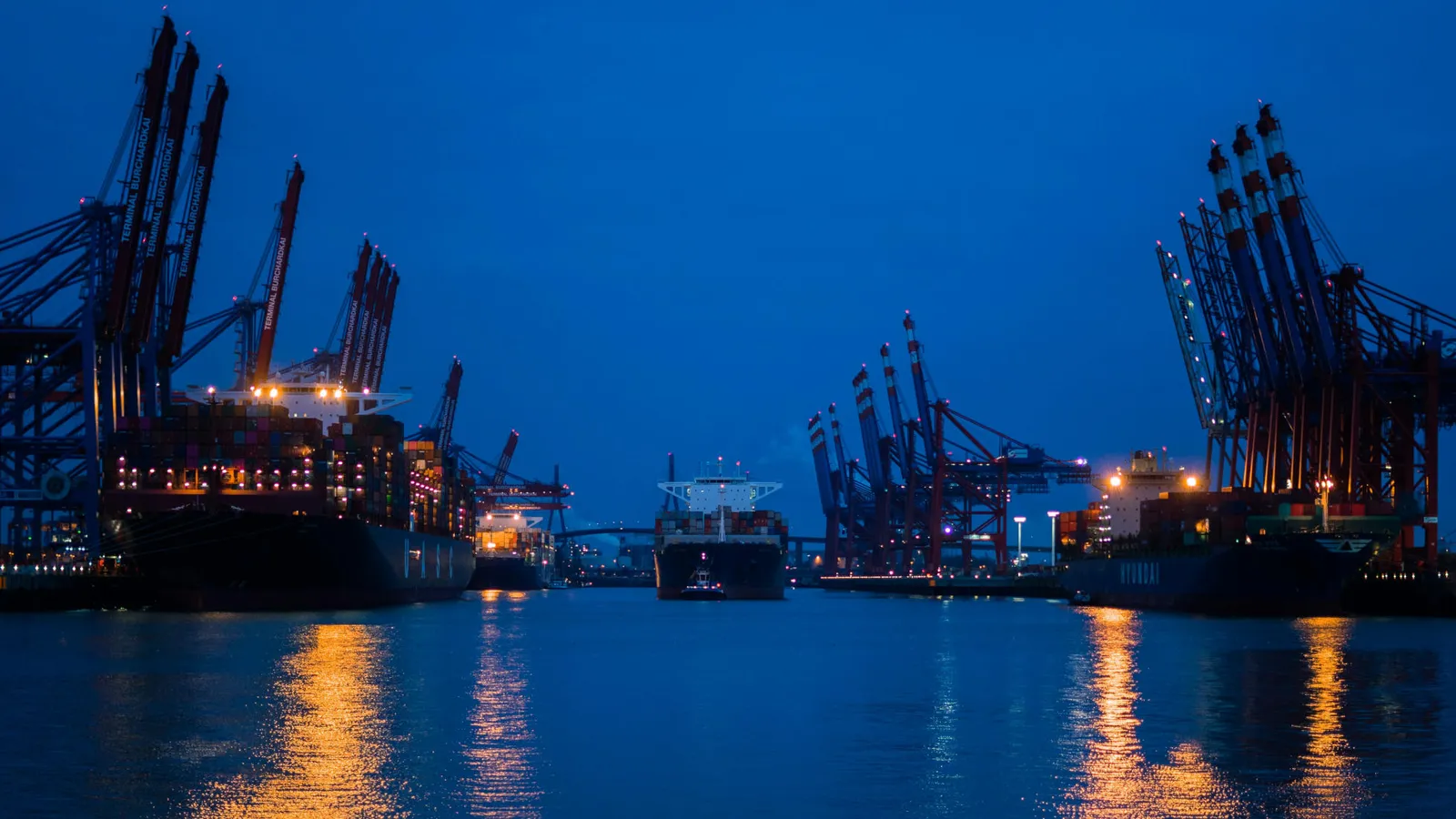
By law, ports are obligated to receive sludge from ships. This means that large volumes of sludge and water from oil separators are collected and handled further, often through external transport and destruction. Helios evaporation technology handles everything on-site, without investment.
Why waste management is important for ports and shipyards
Ports function as a central hub for large process water flows from ships, despite not generating the waste themselves. This creates a need for efficient, local management that reduces waste volumes and dependence on external destruction.
Bilge Water & Oily Runoff
Harbour operations generate large volumes of bilge water, storm runoff, and maintenance wash-down water contaminated with fuel, oil, and heavy metals from vessels and quay surfaces.
Expanded offering for ferry lines
Ports can offer ferry lines more efficient management of sludge and oily waste with Helios. Local treatment reduces transport needs and contributes to lower CO₂ emissions.
Dry dock & maintenance water
Vessel maintenance such as hull washing, blasting and removal of bottom paint generates heavily contaminated process water with heavy metals, biocides and paint particles.
Regulatory & Environmental Exposure
Ports operate in sensitive coastal and estuarine environments. Any discharge non-compliance risks severe regulatory penalties, public scrutiny, and operational restrictions.
On-site treatment. Complete solution.
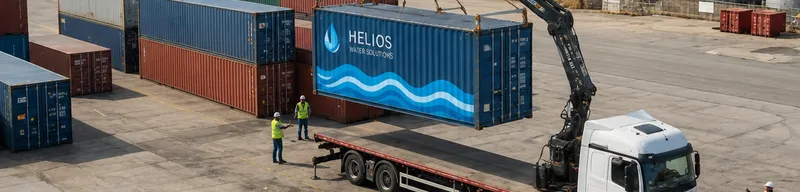
Helios evaporation technology concentrates contaminated harbor water on-site and reduces volumes by up to 90%. Instead of handling large quantities of oil-containing ballast water or toxic drydock water, a small concentrate is created that Helios handles.
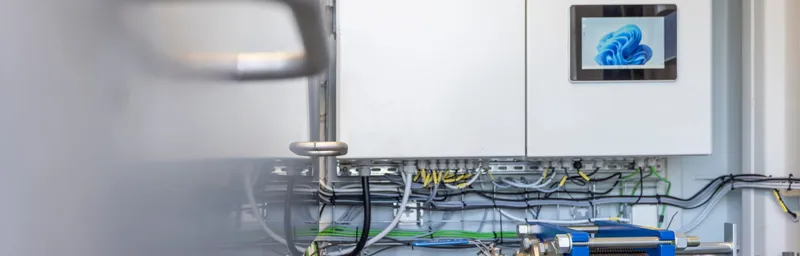
The unit is compact, fully automated, with operational monitoring and zero investment. Helios owns and operates everything under a service agreement where you pay per cubic meter treated.
What You Can Expect
≤90%
Volume reduction
Drastically reduced waste volumes to transport and destroy
100A
Electricity connection
We take care of the electricity cost
0 kr
In investment
We own and operate the equipment
24/7
Automated operation
Fully automated, all maintenance is performed by Helios
Proven in Port Operations
Challenge
Previously, sludge from ship visits was handled through storage in tanks before the entire waste stream was transported for incineration. The sludge typically consists of approximately 70–90% water and 10–30% oil, which meant that large amounts of water were transported and destroyed together with the oil-containing waste. This created high transportation costs, unnecessary energy use, and significant climate impact. Oxelösund Port needed a more sustainable solution that could reduce waste volumes while also recovering resources in the waste stream.
Solution
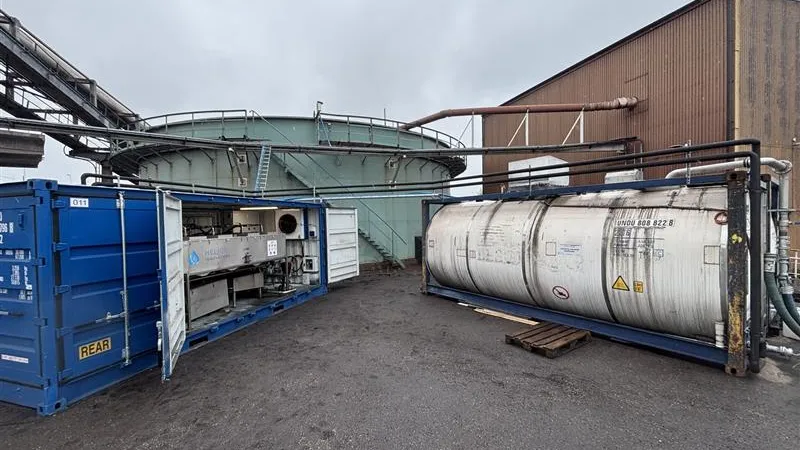
During 2026, Helios Innovations installed a local unit to handle oil-containing sludge directly at the port. Through low-temperature evaporation, water is separated from oil and contaminants. The process enables up to 90% waste reduction. The remaining concentrated waste stream, which contains high levels of oil, is refined and recovered instead of being sent to incineration as waste.
Results
- 800 m³ sludge treated per year
- ≤90% volume reduction
- 10-30% oil-rich concentrate refined and recovered
- 2026 commissioning
Contact Emilie
Get in touch for more information about how we can help you reduce the amount of liquid waste and your CO₂ emissions.